Cookies on this website

We use cookies to ensure that we give you the best experience on our website. If you click 'Continue' we'll assume that you are happy to receive all cookies and you won't see this message again. Click 'Find out more' for information on how to change your cookie settings.

Researchers from NDORMS, the Department of Oncology and Wellcome Centre for Human Genetics attend the Big Bang Fair 2018 to inspire the next generation of scientists.

Last week researchers from three departments and units across the Medical Sciences Division - NDORMS, the Department of Oncology and the Wellcome Centre for Human Genetics - attended the Big Bang Science Fairthe largest celebration of science, technology, engineering and maths (STEM) for young people in the UK. With an audience aged mainly 7-19, the event was a fantastic opportunity to educate and inspire the next generation of scientists. 

A variety of activities were used to engage visitors with the fantastic world of medical science. Researchers from the Kennedy Institute of Rheumatology (NDORMS) used a giant model of a gut wall, complete with magnetic plush bacteria and viruses, to talk about the microbes in our digestive tract and how important they are to our health, while children were also offered the chance to try keyhole surgery on a model knee. 
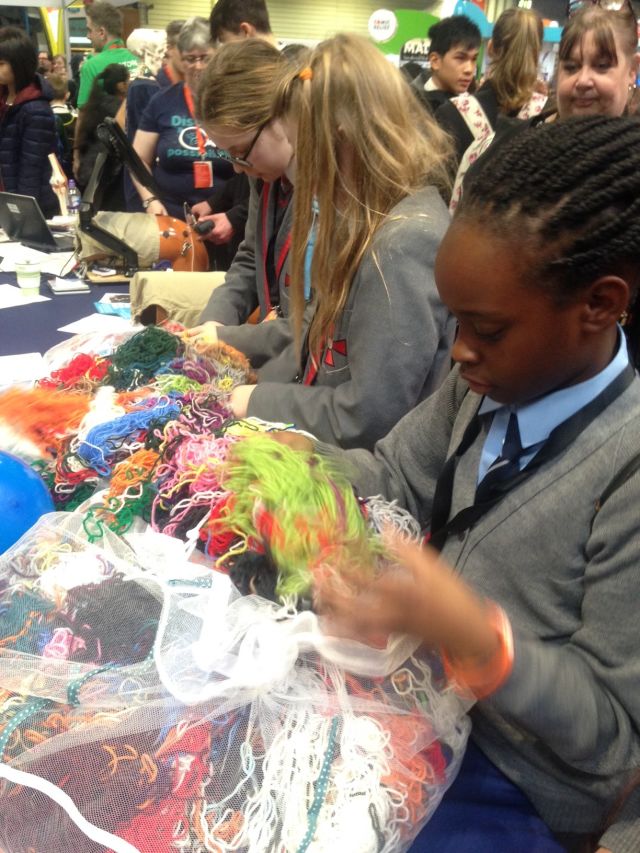
'DNA Damage Wool Bags' from the Wellcome Centre for Human Genetics offered an insight into the size and complexity of our DNA; visitors had 30 seconds to rummage through miles of DNA wool to find the different kinds of damage DNA undergoes. Annabel Coxon from the Oxford Vaccine Group (Department of Paediatrics) also helped children to understand the complexity of DNA by showing them how to decode strings of DNA sequences to uncover the hidden messages. 

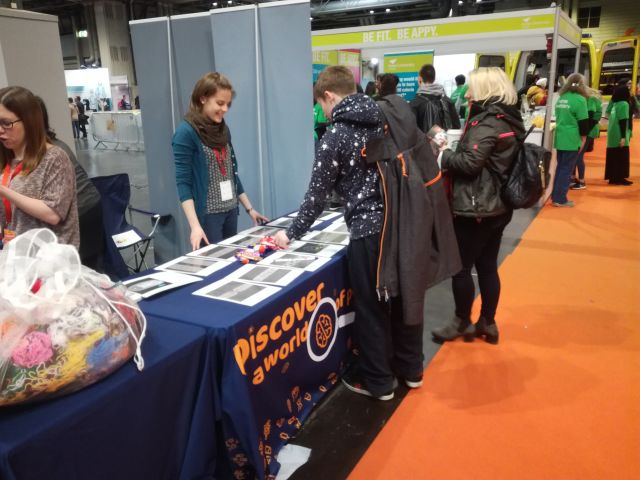
Finally, Oncology researchers were on hand with chocolate CT scans to teach visitors about the part X-rays and CT scans can play in diagnosing cancer. 
Congratulations to all researchers who took part! 

See some highlights from the Big Bang Fair

Find out more about Public Engagement with Research across the Medical Sciences Division

Similar stories

Oxford University and King’s College London Join IMPACT Network Study to Advance Understanding of Profound Autism

The University of Oxford and King’s College London (King’s) have joined the Innovative Medicine and Precision Approaches to Clinical Trials (IMPACT) Network, an international collaboration of sites working together to accelerate clinical trial readiness and therapeutic development for autism through a large-scale natural history and clinical endpoint study.

University of Oxford launches new public awareness campaign for Neurodevelopmental Disorders

The Department of Paediatrics at the University of Oxford today announces the launch of Genes, Brains, and Breakthroughs, a new educational campaign designed to raise public awareness and understanding of neurodevelopmental disorders through a series of accessible, family-informed video resources.

Breakthrough study moves newborn screening for SMA towards nationwide rollout

A major national study led by researchers in the Department of Paediatrics, to evaluate newborn screening for spinal muscular atrophy (SMA) has been funded by the National Institute for Health and Care Research (NIHR), marking a significant milestone towards the potential introduction of SMA screening across the UK.

Magdalen College lit up for Rare Disease Day

Magdalen College Chapel was lit up in the colours of Rare Disease Day last week, as part of the global Chain of Lights initiative.

World's first Phase II Nipah virus vaccine trial launch

The University of Oxford has launched the world’s first Phase II clinical trial of a Nipah virus vaccine candidate.

Global Consortium Launched to Develop Next-Generation Malaria Vaccine

A new international consortium has been established to advance the development of a next-generation malaria vaccine, that aims to extend the protection against malaria and help lead to future efforts to eliminate it by targeting multiple stages of the parasite’s life-cycle.